Ayyan Mani and Adi’s father–son bond shaped by the fabricated genius game
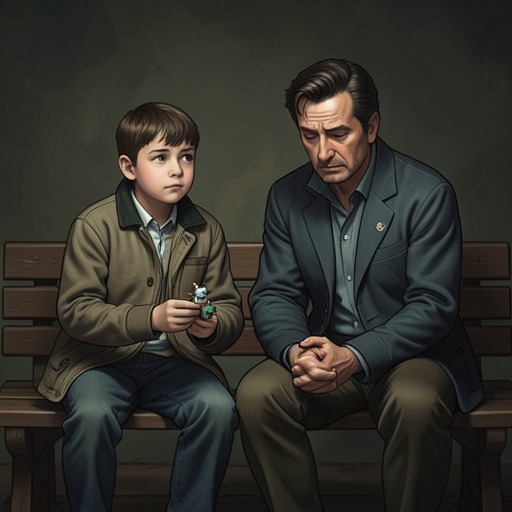
Serious MenAyyan Mani and Adi Mani’s father–son bond is built around a secret that begins as play and grows into a carefully maintained deception. Ayyan gives Adi questions and answers that make him appear extraordinary at school, while Adi learns to value the attention and status the performance brings. Their pact creates a private closeness, but its stakes change as the boy begins to believe the identity his father has invented for him. When Ayyan finally calls the game to an end, he must withdraw not only the performance but also the special world they have made together.
A Game Between Father and Son
The idea begins during a walk along Worli Seaface after Ayyan has taken Adi out for ice cream. Adi names the makes of parked and passing cars after seeing only their fronts or backs. Ayyan recognizes this as a streak of smartness, not proof of genius; he has heard other parents make similarly extravagant claims about their children. Yet he sees in the boy’s quickness the materials for a harmless diversion from the miseries of life in BDD Chawl. The gap between what Adi can actually do and what others might believe becomes the game’s opening.
Ayyan makes the arrangement a pact. He teaches Adi questions to ask in class, from basic queries about gravity and leaves to more elaborate puzzles about sound and light. The questions are designed to interrupt the lesson rather than demonstrate deep knowledge. When teachers try to continue the conversation, Adi has little to say beyond what his father has prepared. His silence does not immediately expose the scheme: he is a young, laconic child, and his partial deafness helps make his unusual manner legible to adults as part of his apparent eccentricity.
The Performance Takes Hold
At first, teachers find Adi endearing, bright, and curious. As his questions grow stranger and more disruptive, they become baffled and begin sending notes home to summon his parents. Those notes bring fear and amusement into the household. Ayyan understands how little is needed to sustain the legend: Adi can say something odd in class once a week, and adults supply the rest of the meaning. The boy’s innate quickness lends the performance plausibility, while his hearing aid and reticence contribute to the impression that he is unusual.
The secret does not remain merely Ayyan’s. Adi tells Oja Mani that he and his father have a pact, but she initially treats the disclosure as ordinary father–son prattle. As attention accumulates, Adi begins to understand that the pact is helping him be regarded as extraordinary rather than simply as a child with a disability. He also senses that his mother would oppose the game and that her opposition could cost him the status he has begun to enjoy. His growing secrecy therefore reflects more than obedience: he has a stake in preserving the identity the game gives him.
Oja’s response to the supposed brilliance is divided. She says she wants Adi to be normal, yet tells other people about his abilities and tries to protect him from the evil eye by circling fire around his face and marking his cheek with black powder. Ayyan sees how readily a genius myth can form around a child who is already smart, unusual, and partially deaf. What begins as a private amusement is now being reinforced by the adults around Adi, even as the mother’s protective rituals reveal how seriously she has taken the possibility of his exceptional promise.
Secrecy, Ambition, and Risk
Ayyan escalates the game by arranging a fictitious news item about Adi. He tells himself that the scheme can be stopped at any moment, must end before they are caught, and will end someday in any case. His confidence is qualified by unease: he is troubled by how readily Adi plays along and notices that, on some days, the boy seems to forget that it is a game. Adi loves the word genius and even mentions it in his sleep. The father’s invention is thus no longer safely confined to the classroom; it is entering the child’s understanding of himself.
Ayyan’s thoughts about other disputed prodigies help him frame what he is doing. He recalls the French child poet Minou Drouet, whose authorship was questioned, and Natasha Demkina, whose mother claimed she had X-ray vision. Ayyan imagines understanding the mothers who built such stories around their children. The comparison does not erase his awareness of the fraud: he still insists to himself that his own game will stop soon. Instead, it shows him finding company and justification in stories where the line between a child’s ability and an adult’s invention remains contested.
The pact is renewed in a small physical gesture after Ayyan has acted in a schoolroom. He tears pages from a notebook in Adi’s bag, gives him the bag, and tells him to remember that what happened in the room is their secret. Adi asks what the secret is; Ayyan answers that it is what he did there. Then Ayyan extends his little finger, and Adi locks his with it. The gesture turns concealment into an intimate ritual: Adi may not yet know every part of what his father has done, but the two are bound by an agreement to keep it private.
The Public Reward and the Limit
After a school quiz, Ayyan leads Adi out of the auditorium while the audience applauds. In the corridor they laugh together. Oja arrives crying and running, then tries to compose herself before hurrying toward them again. Ayyan reflects on the distance between her earlier life as a waiter’s daughter, her arrival as a new bride in a humid one-room home, and this moment of seeing her son celebrated. The exhilaration seems, for that moment, to make the deception worthwhile. Yet it also sharpens Ayyan’s fear and excitement: the game has been stretched too far and must end, perhaps immediately.
Oja kneels beside Adi, holds him by the hair, asks how he knows so much, embraces him, and then holds his arms as she praises and kisses him. She says she will put an evil eye on his cheek; Ayyan replies that nobody does such things anymore. Her reaction makes the public performance matter within the family, not just at school. The boy receives affection and admiration, while the father sees the costs gathering around an achievement that is not what it appears to be.
The decisive withdrawal comes at the Institute of Theory and Research, where Ayyan writes a Thought for the Day on a blackboard and Adi waits near the lifts in his favorite blue shirt, white jeans, and imitation Nike shoes. After an article in The Times of India, the institute’s Brahmin scientists have summoned the boy to see a Dalit genius for themselves. Ayyan enjoys watching their grand recognition of Adi, but knows the visit is to be the last day of the performance. The previous night, on the tar-coated terrace of BDD Chawl, he told his son that the game was over.
Ayyan spells out what the ending means: he will no longer give Adi clever things to say in class, arrange for quiz questions to fall into his hands, or have articles about him appear in the papers. Adi nods sadly but understands, and repeats that the game is over. The scene closes the pact without undoing the intimacy that made it possible. Their bond has carried a child from coached questions to public acclaim, but its final act is the father’s decision to stop supplying the fiction—and the son’s acceptance of that decision, even after he has learned to want what the fiction brought him.